NEWS·SEPTEMBER 2025
The UK and US have signed a wide ranging technology partnership during this week's state visit, and buried inside the headlines about artificial intelligence is one of the most significant real estate stories of the year.

NEWS·SEPTEMBER 2025
The UK and US have signed a wide ranging technology partnership during this week's state visit, and buried inside the headlines about artificial intelligence is one of the most significant real estate stories of the year.

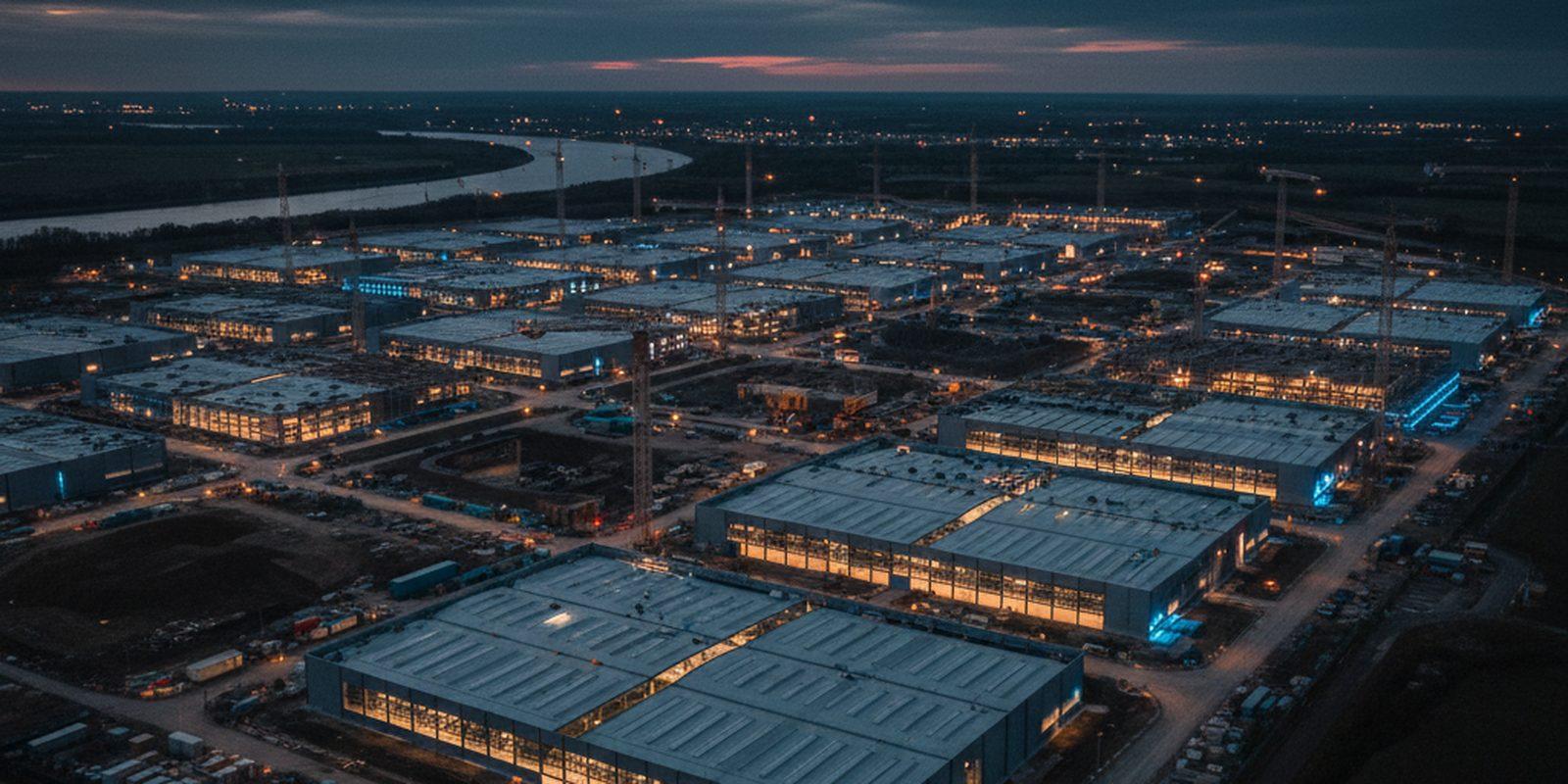
Alongside the agreement, the government has designated an AI Growth Zone in the North East of England, with up to £30bn of private investment expected to flow into data centre development and associated infrastructure. Thousands of construction and permanent jobs are forecast, and further zones are expected to follow.
Data centres have quietly become one of the most sought after asset classes in UK real estate. Demand for computing power is growing faster than the grid can supply it, which means the scarce commodity is no longer the building itself but land with power. Sites with a secured grid connection now command values that would have been unthinkable five years ago.
For landowners, the designation of AI Growth Zones changes the conversation. Land that might once have been promoted for logistics or housing could now attract interest from some of the deepest pockets in global capital. For investors, the attraction is obvious: long leases, covenant strength and demand that is structural rather than cyclical.
The constraints are equally clear. Power availability, planning and community engagement will decide which schemes actually get built. The winners will be those who assemble sites with credible routes to grid capacity early.
Our view is that this announcement marks the moment data centres moved from a niche alternative sector into the mainstream of UK property. Expect land values around designated zones to reprice quickly.
NEWS·SEPTEMBER 2025
The UK and US have signed a wide ranging technology partnership during this week's state visit, and buried inside the headlines about artificial intelligence is one of the most significant real estate stories of the year.

Alongside the agreement, the government has designated an AI Growth Zone in the North East of England, with up to £30bn of private investment expected to flow into data centre development and associated infrastructure. Thousands of construction and permanent jobs are forecast, and further zones are expected to follow.
Data centres have quietly become one of the most sought after asset classes in UK real estate. Demand for computing power is growing faster than the grid can supply it, which means the scarce commodity is no longer the building itself but land with power. Sites with a secured grid connection now command values that would have been unthinkable five years ago.
For landowners, the designation of AI Growth Zones changes the conversation. Land that might once have been promoted for logistics or housing could now attract interest from some of the deepest pockets in global capital. For investors, the attraction is obvious: long leases, covenant strength and demand that is structural rather than cyclical.
The constraints are equally clear. Power availability, planning and community engagement will decide which schemes actually get built. The winners will be those who assemble sites with credible routes to grid capacity early.
Our view is that this announcement marks the moment data centres moved from a niche alternative sector into the mainstream of UK property. Expect land values around designated zones to reprice quickly.